Driveway Gate Installation and Repair: Options for Fort Smith Homes
A driveway gate adds security, privacy, and a real sense of arrival to your property. But if you're just starting to look into one, the choices pile up fast. It could be swing or slide, wood or metal, what kind of opener, how much it all costs.
Before you call anyone or set a budget, it helps to understand your options. This guide walks through the main types of driveway gates, what drives the price, and how the automatic operators work.
Once you understand this, you can plan your driveway gate installation with a clear head and realistic expectations for your Fort Smith home.
The Short Answer
A driveway gate installation has three parts: the gate, the operator that opens it, and any access controls. Installed, most residential gates run roughly $1,600 to $13,000, with the average project landing around $3,000 to $7,000.
Your two biggest decisions are swing versus sliding, and the material. Both come down to your driveway's shape and space. From there, the operator and add-ons like a keypad or intercom shape the final price.
Swing vs. Sliding: The First Big Decision
Almost every residential driveway gate is either a swing gate or a sliding gate. Which one fits comes down to the space and slope of your driveway, not just looks.
Swing Gates
Swing gates open on hinges, like a large door, in one or two panels. They're the most common and often the most affordable choice, with a classic, welcoming look that suits most homes.
The catch is space. The panels need a clear, level arc to swing through, either inward or outward. If your driveway slopes up right behind the gate, the bottom edge can scrape, and snow, leaves, or gravel piling in the path will jam it. Swing gates are ideal for flat driveways with room to spare.
Sliding Gates
Sliding gates roll sideways along a track across the opening. Because they don't swing, they don't need depth in front or behind, which makes them the go-to for tight or sloped driveways.
What they need instead is lateral space along the fence line, roughly equal to the width of the gate. A 14-foot gate needs about 14 feet of clear run to one side, with no mailbox, meter, or garden bed in the way.
Sliding gates cost a bit more due to the track and groundwork, but for steep, short, or very wide driveways, they're often the only practical option.
Choosing Your Gate Material
The material sets the look, the price, and how much upkeep your gate will need. Here are the common options:
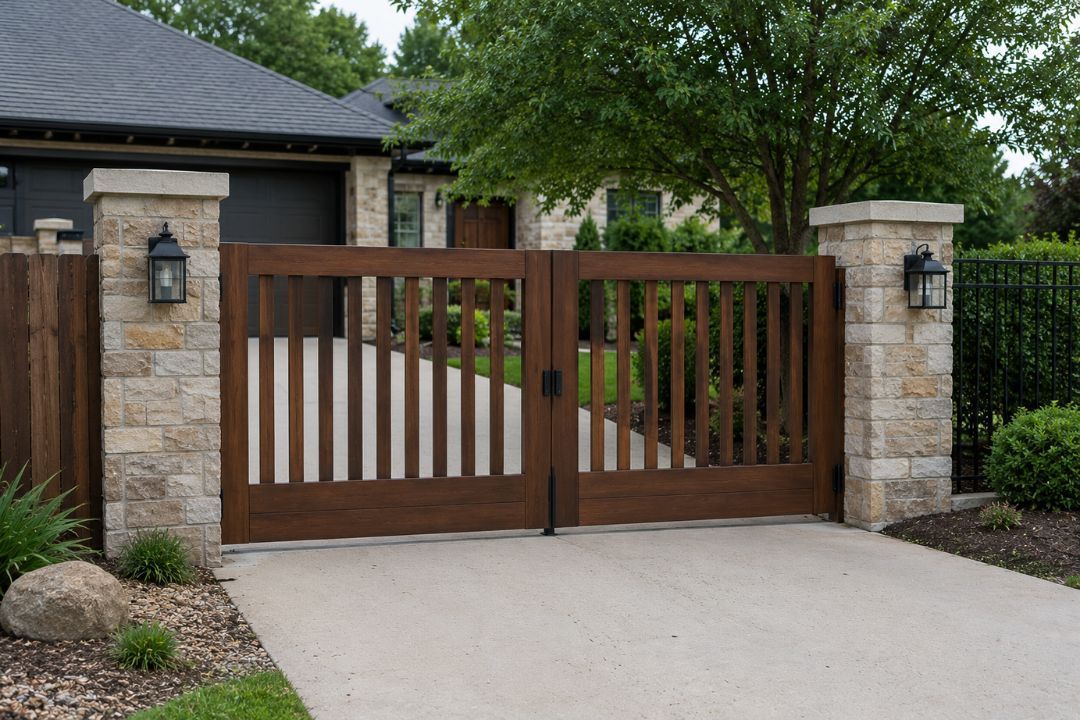
- Wood: Warm and classic, and easy to match to fencing. It needs regular sealing to guard against weather and rot.
- Wrought iron: Strong, secure, and elegant, with the highest-end look. It's heavier and needs occasional rust protection.
- Steel: Very strong and durable, a great security choice, though also heavy and prone to rust without care.
- Aluminum: Lightweight, rust-proof, and low-maintenance, a popular middle-ground pick.
- Vinyl: The most affordable and lowest-maintenance, though not as sturdy as metal.
Heavier materials like wrought iron and solid wood look striking, but they also need a more powerful operator, which affects the total cost.
How Automatic Gate Operators Work
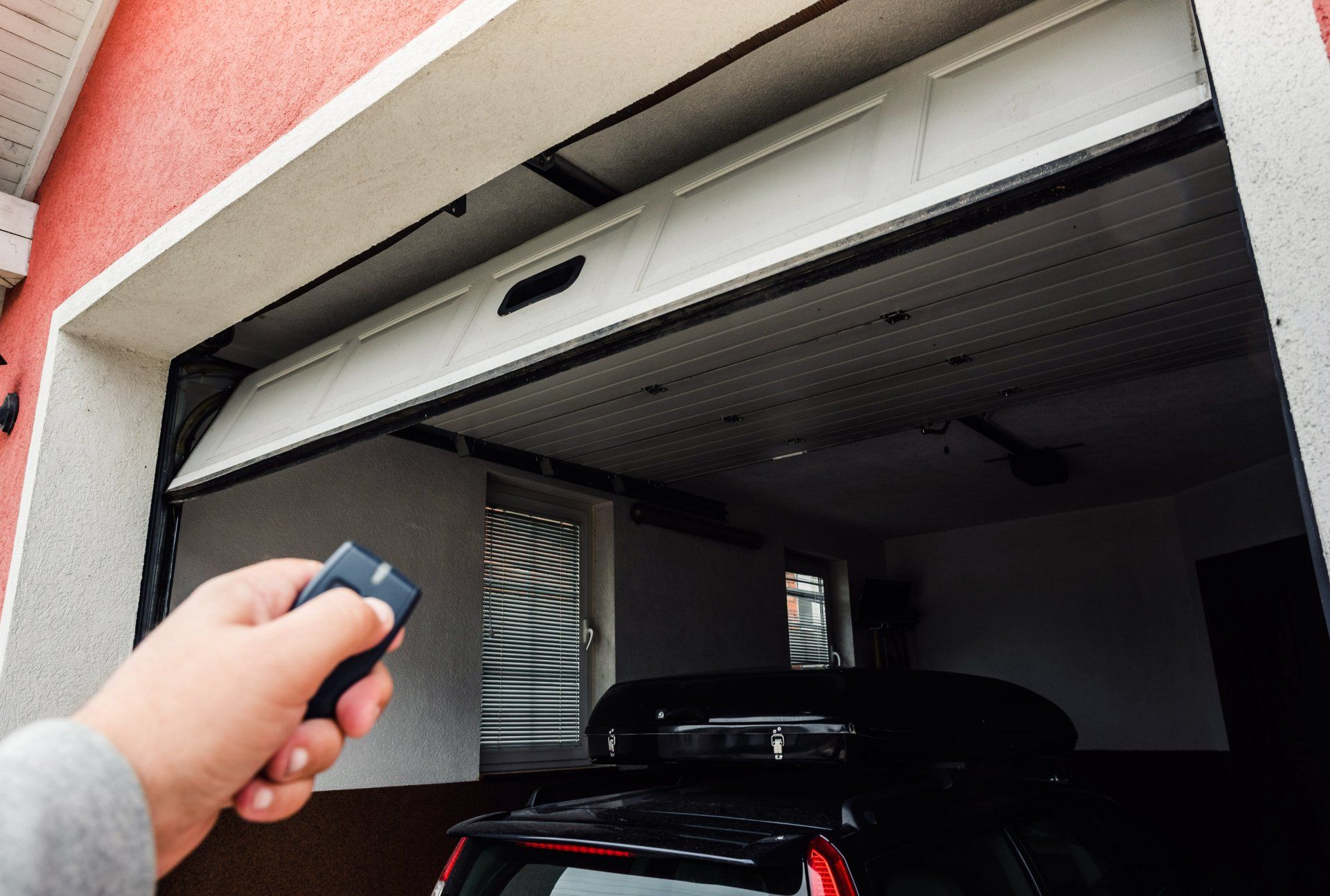
The operator, sometimes called a gate opener, is the motor that opens and closes the gate. It's the part of the system that's closest to a garage door opener, and it works on similar principles. A motor, a control unit, safety sensors, and a remote or keypad to trigger it.
Operators are matched to the gate type. Swing gates use an arm or piston that pushes each panel open, while sliding gates use a motor that drives the gate along its track.
The heavier your gate, the more powerful the operator it needs, which is why matching the two correctly matters so much. If you've researched the best garage door opener for your home, you'll find gate operators follow the same logic around motor strength, duty cycle, and smart features.
You'll also choose a power source. Electric operators wire into your home's power and run reliably whenever the power's on.
Solar operators charge a battery from a panel and cost a little more, but they're ideal for gates far from a power source. Battery backup is worth adding in either case if outages are common in your area.
Access Controls and Add-Ons
Once the gate and operator are set, access controls decide how you and your visitors get in. These add both convenience and cost:
- Remotes: $75 to $300 each, to open the gate from your car.
- Keypad: $250 to $650, letting guests enter a code without disturbing you.
- Sensors: $250 to $1,250, for motion or safety detection.
- Intercom: $680 to $4,500, to see or speak with visitors before letting them in.
A safety feature worth insisting on is auto-reverse, which stops and reverses the gate if it meets a car, pet, or person, just like a garage door's safety system.
What Driveway Gate Installation Costs
Gate pricing has a wide range because every property is different. Here's a rough breakdown for planning:
- Full installed project: about $1,600 to $13,000, averaging $3,000 to $7,000.
- The gate alone: $500 to $9,000, depending mostly on material and size.
- The operator: $300 to $5,000, based on gate weight and features.
- Motorizing an existing gate: $600 to $3,000, far less than a full new install.
If you already have a gate and just want it automated, that last option is the most budget-friendly path. One of the most common gate projects homeowners ask about.
Keeping Your Gate Working: Maintenance and Repair
Like any moving system, a driveway gate needs occasional care to stay reliable. A yearly check keeps small issues from turning into costly ones.
Routine maintenance includes lubricating moving parts, cleaning the track or hinges, clearing debris from the gate's path, and testing the safety sensors. Common repairs involve worn rollers, a straining or failing motor, misaligned tracks, or sensors that need recalibrating.
Catching these early, much like with a garage door, is what keeps the whole system running smoothly for years.
Frequently Asked Questions
How much does a driveway gate cost to install?
Most installed driveway gates run between $1,600 and $13,000, with the average project around $3,000 to $7,000. The gate itself accounts for $500 to $9,000 depending on material and size, and the operator adds $300 to $5,000. Access controls like keypads and intercoms raise the total further.
Is a swing gate or sliding gate better?
It depends on your driveway. Swing gates cost less and suit flat driveways with room for the panels to open. Sliding gates work better for sloped, short, or very wide driveways, since they need lateral space along the fence instead of a clear swing arc.
Can I automate a gate I already have?
Often, yes. Motorizing an existing gate typically costs $600 to $3,000, far less than a full new installation. The main factors are the gate's weight and type, since those determine which operator it needs. A heavier gate calls for a stronger, pricier motor.
What's the most low-maintenance driveway gate material?
Aluminum and vinyl are the easiest to live with, since neither rusts and both shrug off weather with little care. Aluminum offers more strength and a metal look, while vinyl is the most affordable. Wood and wrought iron look beautiful but need regular upkeep to prevent rot or rust.
How long does a driveway gate installation take?
Motorizing an existing gate usually takes a few hours, while a full new gate installation can run one to four days. The timeline depends on the gate type, the groundwork needed, and whether electrical or track work is involved. Your installer can give you a firm estimate after seeing the site.
Do driveway gates need much maintenance?
Not much, but some. Plan on an annual or twice-yearly check to lubricate moving parts, clean the track or hinges, and test the safety sensors. This simple routine catches small problems early and keeps the gate and its operator running reliably for years.
Planning Your Driveway Gate Project
A driveway gate is a real investment in your home's security, privacy, and curb appeal. The right choice comes down to your driveway's layout, your material preference, and the operator that fits. Getting those three right from the start saves you money and headaches down the road.
While driveway gates are their own specialty, the operator technology overlaps closely with the garage door systems we work with every day. As the Arkansas River Valley's trusted garage door team since 1985, we're always glad to talk through your options.
Call Fort Smith Garage Door Co. at (479) 646-4644 with any questions about gate operators or your garage door needs, and we'll point you in the right direction.