Commercial Garage Door Installation: Choosing the Right Door for Your Facility
A commercial garage door isn't a purchase. It's infrastructure. Choose wrong and you'll pay for it every day, in downtime, in energy loss, and in a door that wears out years before it should.
The trouble is that most buyers start with a catalog. They look at doors, compare prices, and pick something that fits the opening. That's backward. A smarter commercial garage door installation starts with your building and what happens inside it.
Here's how to work from your facility to the right door, in the order that actually matters.
The Quick Answer
Four things decide your door: how many times it cycles per day, how much headroom you have, whether you heat or cool the space, and what you need to secure.
Answer those four and the field narrows fast. Sectional steel and rolling steel cover most facilities. High-speed, fire-rated, and glass doors serve specific needs. Everything else is detail.
Start With Your Cycle Count
This is the number almost nobody asks about, and it's the one that costs the most when you get it wrong.
A residential garage door opens a few times a day. A commercial door in a busy facility might open 50, 100, or more. Do the math: 50 cycles a day is over 18,000 a year. A builder-grade spring system rated for 10,000 cycles is finished in seven months.
That's why commercial doors carry cycle ratings, often 50,000 to 100,000 or higher. High-cycle springs and reinforced hardware cost more upfront and save you enormously in service calls and downtime.
So count honestly. How many times does that door open on a normal day? Multiply by 250 working days. That number should drive your spec before anything else does.
Then Look Up: Your Headroom Decides a Lot
Ceiling space narrows the field faster than any other factor, and it's the constraint people notice last.
If your ceiling is crowded with HVAC ducts, sprinkler lines, lighting, or storage racking, a sectional door's tracks have nowhere to go.
Rolling steel is your answer, since it coils into a compact barrel above the opening and needs almost no overhead room. Vertical-lift sectional doors work too if your ceilings are genuinely high.
If your ceiling is open and clear, a sectional door is on the table, along with its better insulation and quieter operation. Low-headroom track systems exist as a workaround, but they need more backroom instead, so you're trading one constraint for another.
Measure before you shop. It saves a wasted conversation.
Do You Condition the Space?
If you heat or cool the building, an uninsulated door is a hole in your operating budget. If you don't, insulation is money you don't need to spend.
Insulated doors use polystyrene or polyurethane cores. Polyurethane delivers the higher R-value and adds structural rigidity, since the foam bonds to the door skin. For cold storage, climate-controlled warehousing, or any space where employees work all day, it pays for itself.
For an unconditioned warehouse or a detached shop, skip it. Put that budget into cycle rating instead, where it will do more good.

What Are You Protecting?
Security requirements vary more than people expect, and they should shape the door as much as the traffic does.
Rolling steel is the strongest deterrent, with heavy-gauge interlocking slats and few exposed parts. It's the right call for after-hours exposure, high-value inventory, or any opening on a street-facing wall.
Sectional steel with good locking hardware handles most standard facilities well. Aluminum and glass doors offer the least raw security but bring visibility and natural light, which matters for showrooms and customer-facing spaces.
And if your door sits in a fire wall, code will likely require a fire-rated door regardless of what else you'd prefer. That's not a style choice, it's a compliance one.
Matching the Door to Your Facility
Here's how it typically shakes out:
- Warehouse and distribution: rolling steel for high cycles and a clear ceiling, or insulated sectional if you condition the space.
- Manufacturing and industrial: rolling steel, for durability and security under heavy use.
- Cold storage: insulated sectional or high-speed doors, to hold temperature and cut air exchange.
- Auto shops and service bays: sectional steel, often insulated for tech comfort.
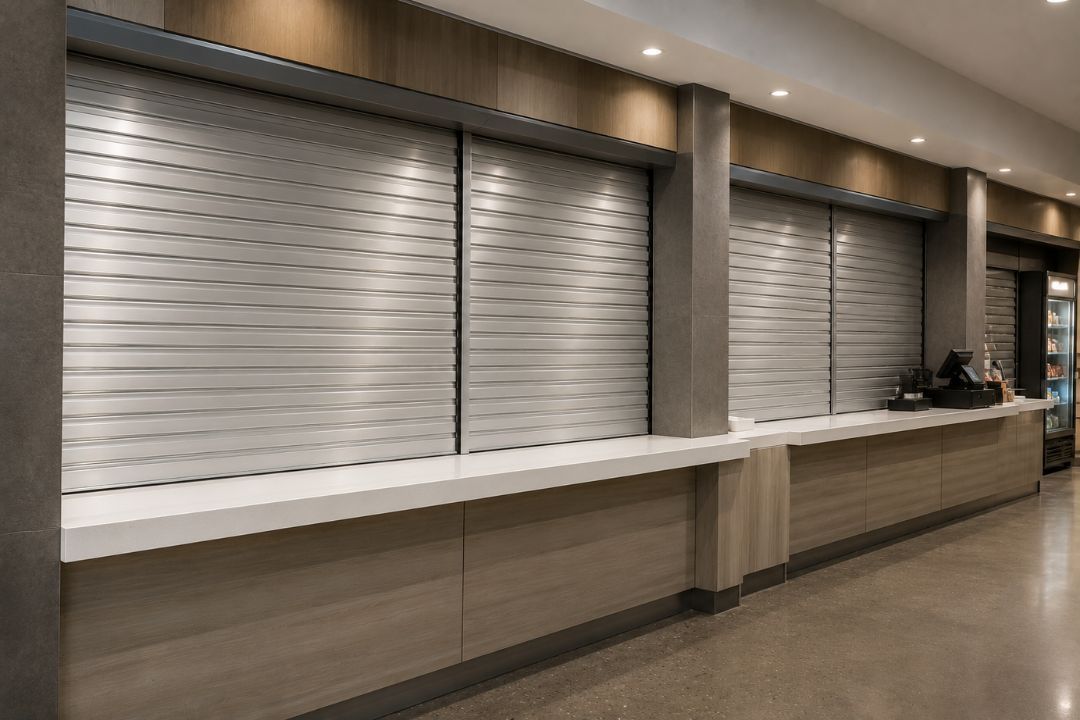
- Retail storefronts: aluminum and glass for visibility, or security grilles after hours. For service counters and pass-throughs, a proper counter shutter installation secures the opening without closing off the space.
- Self-storage: rolling steel, for simplicity and security across many openings.
- Fire stations and showrooms: full-view glass, for the look and the light.
What Commercial Installation Actually Involves
A commercial installation is a different animal from a residential one, and knowing the steps helps you plan around it.
It starts with a site evaluation: measuring the opening, checking floor level, and confirming the structure can carry the door and its hardware. Then comes code and permitting, which may include fire ratings, wind-load requirements, and local approvals. Skipping this step is how projects get red-tagged.
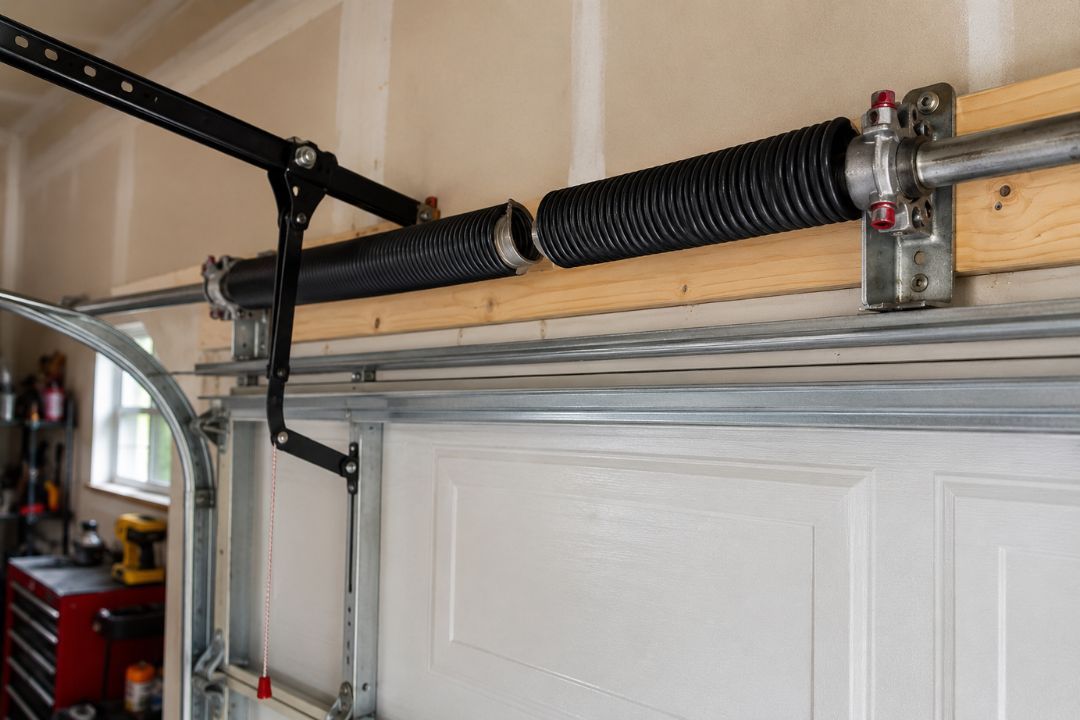
If there's an old door, it comes out first, along with the track and opener, and the mounting surface gets inspected for rust, cracks, or warping. Then the new track and spring system go in, calibrated to the door's weight, followed by the operator and any access controls.
The job ends with balance and safety testing, plus a walkthrough for your team. That's the part our commercial garage door services never skip, because a door your crew doesn't understand is a door that gets misused.
Get the Right Door for Your Building
The best commercial garage door installation is the one you stop thinking about the day after it goes in. That only happens when the door matches your cycles, your ceiling, your climate, and your security needs.
We've been outfitting facilities across the Arkansas River Valley and Eastern Oklahoma since 1985, and we'll help you spec a door that fits how your building actually works. Businesses needing garage door services in Alma, AR and across the region can call Fort Smith Garage Door Co. at (479) 646-4644 to request a quote.
Frequently Asked Questions
What's the difference between a commercial and residential garage door?
Scale and durability. Commercial doors are wider, taller, and built from heavier-gauge material with reinforced hardware. The biggest difference is cycle rating: commercial doors are engineered for tens of thousands of cycles, while a residential door isn't built for the constant use a facility puts on it.
What is a cycle rating, and why does it matter?
A cycle is one full open and close. Cycle ratings tell you how many the spring system is built to handle before it needs replacing. If your door opens 50 times a day, a low-cycle system fails within a year, so matching the rating to your traffic is the single best way to avoid downtime.
How long does commercial garage door installation take?
Most standard installations are completed within a day. Larger openings, multiple doors, structural work, or fire-rated units can take longer. A site evaluation gives you a realistic timeline before the work is scheduled.
How long do commercial garage doors last?
With regular maintenance, 15 to 30 years is typical, depending on the door type and how hard it works. Rolling steel doors generally last longest thanks to fewer moving parts. Cycle rating and service frequency matter more than the number on the calendar.
Do I need an insulated commercial door?
Only if you condition the space. If you heat or cool the building, or store temperature-sensitive goods, insulation pays for itself in energy savings and working comfort. For an unconditioned warehouse or shop, you can skip it and spend that budget on durability instead.
Do I need a fire-rated door?
If the door is installed in a fire wall, almost certainly yes. Local building codes and your occupancy type determine the specific rating required. A commercial installer will know the requirements and pull the right permits.