Garage Door Safety Features Every Fort Smith Homeowner Should Know
Garage door safety features are what stop a heavy, fast-moving door from hurting a child, a pet, or a car. Some are built into the opener, others into the door itself, and all of them can quietly stop working. Here is what each one does and how to check it.
Features Built Into the Opener
Photo eye sensors
Two small sensors near the floor send a beam across the opening. If something breaks the beam while the door closes, the door reverses. The U.S. Consumer Product Safety Commission has required residential openers made since January 1, 1993, to have an external entrapment protection device, such as an electric eye.
Auto-reverse
If a closing door hits an obstruction, it should stop and reverse. This serves as a backup if the beam fails to detect an obstruction.
Manual release
The red cord disconnects the door from the opener so you can lift it by hand during an outage. Use it only when the door is fully closed, and never touch the springs.
Features Built Into the Door
- Safety cables on extension springs. They keep a broken spring from whipping across the garage.
- Pinch-resistant panel joints. Many sectional doors are designed to reduce finger pinch points.
- Rolling code remotes and lock mode. The signal changes with each use, and lock mode turns off remotes while you travel.
- Balanced travel. A well-balanced door stays put when stopped, so it doesn't slam down on anything in its path.
Safety features work as a set. A strong spring system and a working sensor beam protect you in different ways, and neither replaces the other.
Power Outages and Backup Release
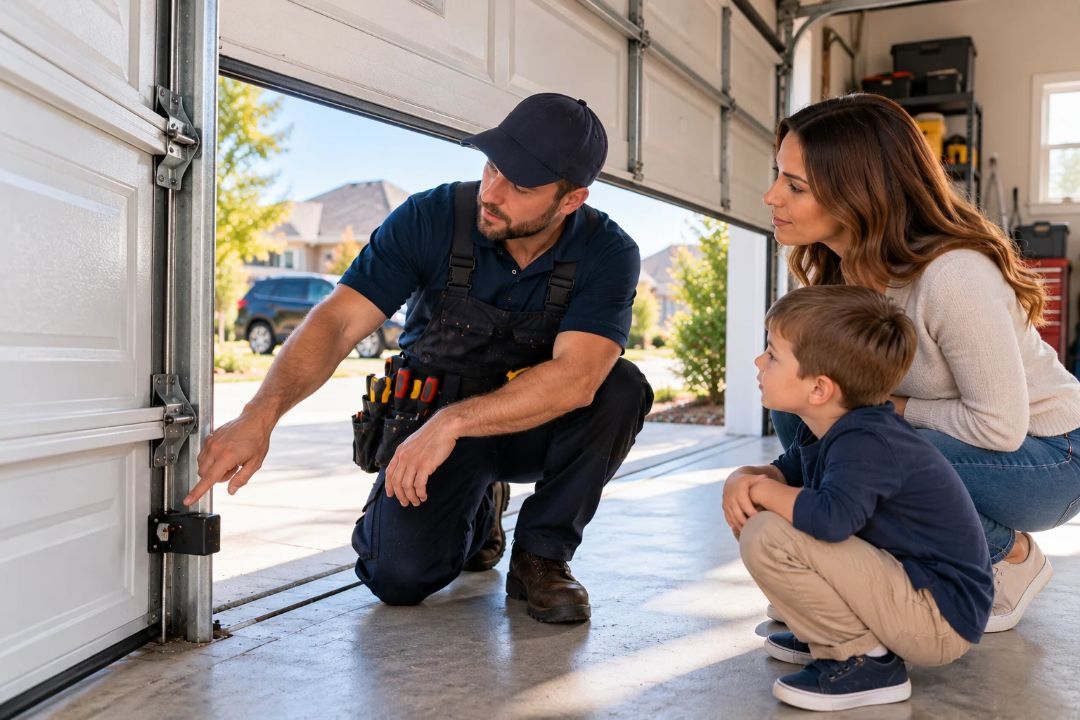
When the power drops, the opener stops, and the door stays where it is. The manual release lets you move it by hand, which matters if a vehicle is inside. Some openers include battery backup, so ask about it when you shop. After power returns, reconnect the door according to your opener’s manual and run the reversal test again.
Why Springs and Cables Deserve Respect
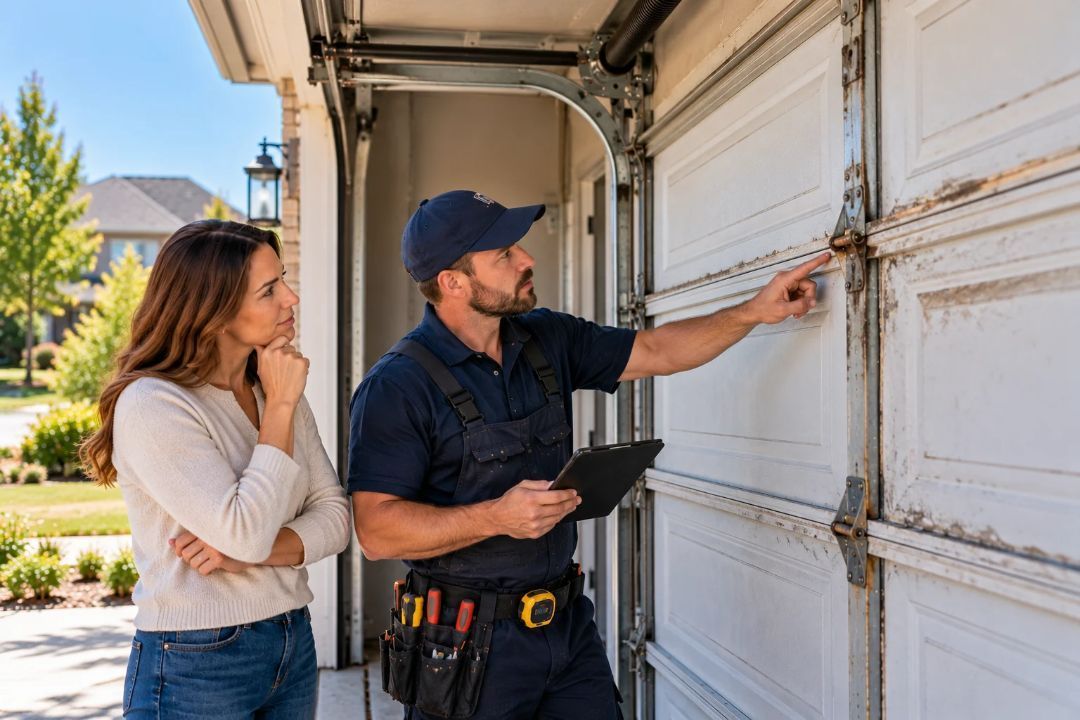
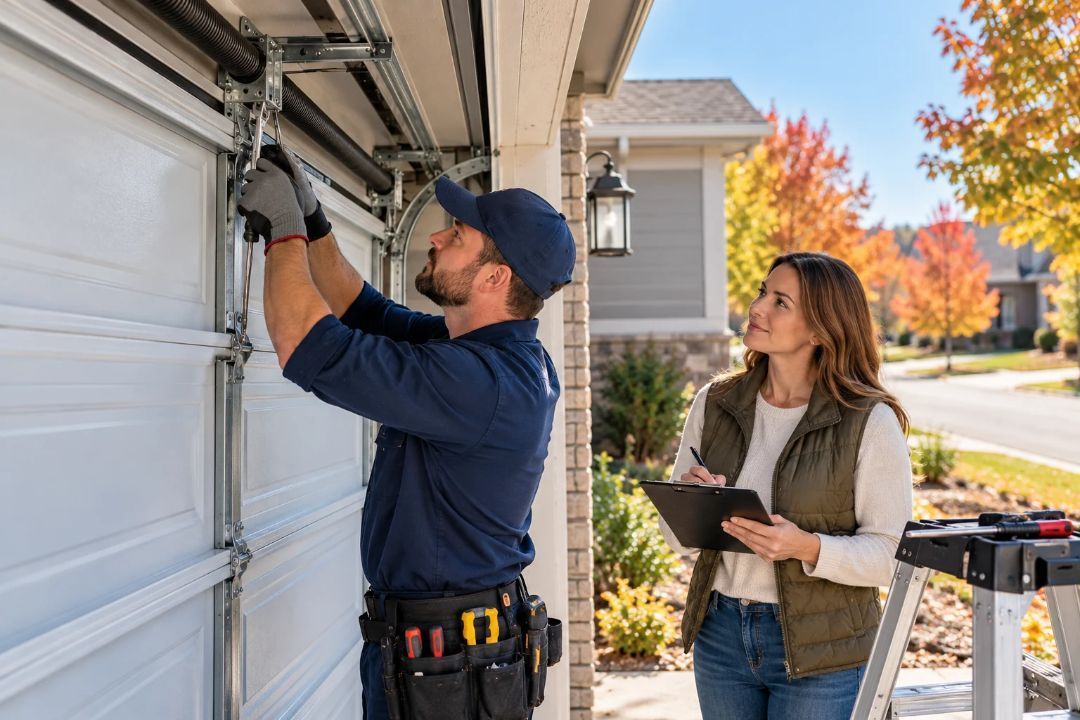
The spring system carries the door’s weight, and it stays under high tension even when the door is closed. A worn or broken spring can leave the door stuck or unsafe to run. Cables fail the same way, with little warning. Inspect them, but don't adjust, loosen, or replace them yourself.
Older Openers Need a Second Look
If your opener is old, check for sensors near the floor. No sensors usually means the opener predates the 1993 requirement. Replacement is often the safest path, and a technician can tell you what fits your door.
Habits That Keep Everyone Safe
- Keep remotes and wall controls out of reach of children.
- Never walk or play under a moving door.
- Keep the path clear of bikes, toys, and tools.
- Do not use the opener if the door looks crooked or sticks.
Test Them Every Month
Skipping the monthly check leaves your garage door safety features unverified. The CPSC recommends testing the reversing feature monthly.
- Clear the area of people, pets, and vehicles.
- Close the door and wave a broom handle through the photo eye beam. The door should reverse.
- Lay a 2x4 flat on the floor in the door’s path and close the door. It should stop and reverse on contact.
- Wipe the sensor lenses and confirm they face each other.
A pass on both tests tells you the opener is still doing its job today. A slow reversal, a door that stops only after it hits the board, or a beam that fails on a sunny afternoon all signal a problem. Write down the date of each test, so a pattern shows up before a failure does.
If either test fails, stop using the automatic opener and contact our technicians through our contact page for an inspection. For quick checks, see our opener troubleshooting guide, or learn about smart opener features such as battery backup and alerts.
Frequently Asked Questions
Do all garage door openers have photo eye sensors?
Not older ones. Openers made since 1993 must include external entrapment protection, so an older unit may lack it and deserves a technician’s opinion.
Why will my door not close?
Misaligned or blocked sensors are a common cause. Wipe the lenses, clear obstructions, and call us if it persists.
Is it safe to repair springs myself?
No. Springs hold high tension and need professional handling. See our residential garage door services for help with repairs.
Can I test the door by myself?
Yes, the monthly tests above need no tools. Keep children and pets out of the area while you test.
Do smart openers add safety?
Some add alerts and battery backup, but they do not replace monthly testing.
What should I do if the door reverses on its own?
Check for blocked sensors first. If it keeps happening, stop using the opener and schedule an inspection.

Rolling Steel vs. Sectional Doors: Choosing the Right Commercial Door for Your River Valley Business