Seasonal Garage Door Maintenance Checklist for Fort Smith Homeowners
A garage door maintenance checklist works best when it follows the weather. Fort Smith swings between hot summers and cold snaps, and each swing stresses different parts of your door. Use this four-season list to catch small problems early and to know which jobs to leave alone.
Monthly Quick Check
Between the seasonal jobs, spend two minutes a month on the basics.
- Watch one full open-and-close cycle from start to finish.
- Look for gaps, rubbing, or a door that sits crooked.
- Listen for grinding, popping, or squealing.
- Confirm the wall control and remotes respond the first time.
Would you rather have a technician run this list? Our residential garage door services include maintenance and safety inspections. Reach out through our contact page.
Before You Start
Gather a soft cloth, garage door lubricant, a flashlight, and a socket set. Run the door once while you watch and listen, so you know what normal sounds like. Write down the date and anything odd. Those notes help you and any technician later. Unplug the opener before hands-on work near the tracks, and work in good light with a helper.
Spring: Clean, Lubricate, Tighten
Winter leaves grit and dried lubricant behind, so spring is the best time for a full cleanup.
- Wipe the tracks clean. Do not grease them.
- Lubricate rollers, hinges, and springs with a garage door lubricant.
- Tighten visible bolts on hinges and track brackets.
- Leave bottom brackets, spring hardware, and cables to a technician.
Summer: Watch the Heat and the Sensors
Heat dries out seals, and sunlight can bounce into sensor lenses, so summer is a good season for the safety checks.
- Check weatherstripping for cracks.
- Wipe the photo eye lenses and confirm they face each other.
- Run the auto-reverse test.
- Listen for new scraping or popping.
- Look at the panels for dents or warping where sun hits hardest.
Fall: Get Ready for Cold
Cold snaps are harder on a door that already has a small problem, so fix or flag issues now.
- Inspect the bottom seal for splits.
- Clear leaves and grit from the door base and tracks.
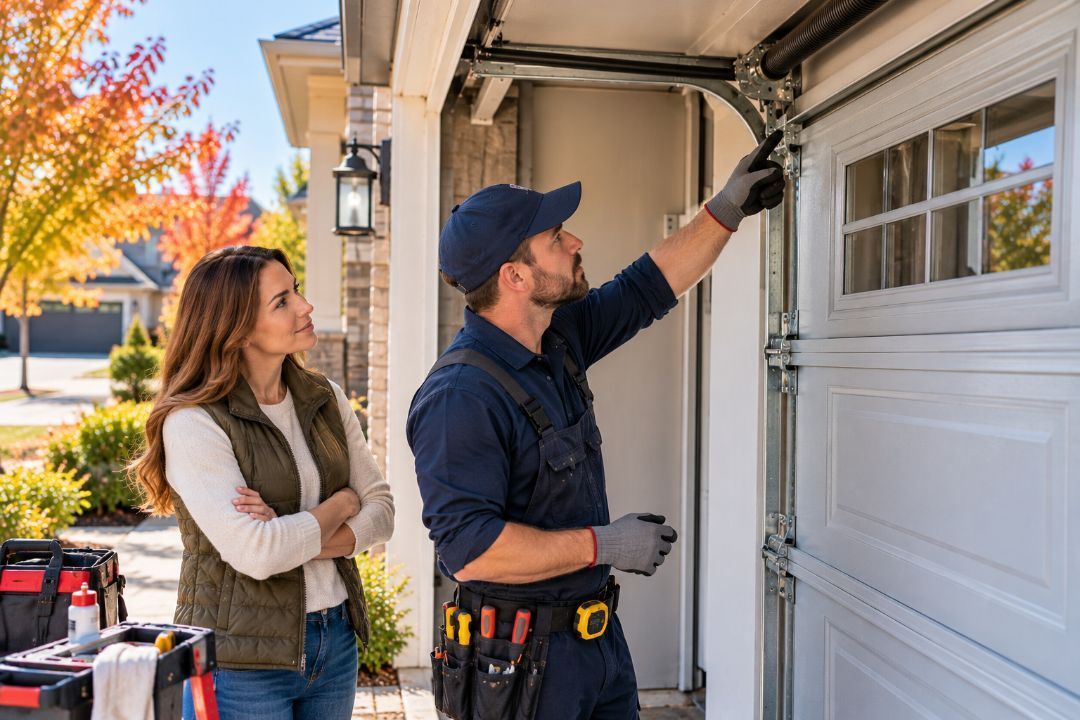
- Test the balance with the door fully closed. Pull the red release cord, then lift the door by hand to about waist height. It should stay put. If it drops or shoots up, stop and call a technician.
Winter: Protect Against Ice
Ice and frozen weatherstripping can pin a door to the floor, and forcing it can damage motors and panels.
- Clear ice from the threshold before running the door.
- Never force a frozen door. If it will not budge, our steps for a garage door stuck closed start with safe checks.
- Replace weak remote batteries, since cold drains them faster.
- Keep snow and slush from piling against the bottom seal.
- Run the door once after a deep freeze and watch for slow or jerky travel.
Keep a Simple Log
Jot down the date, the season, what you checked, and anything that changed. A one-line note, such as a new squeak on the left side, tells a technician far more than a vague memory. After a year, the log also shows which parts wear out fastest.
When to Call a Professional
- Frayed or rusted cables
- Visible gaps in a spring
- A door that sits crooked or comes off track
- Loud banging, or an opener that struggles or reverses. Our opener troubleshooting guide covers the quick checks.
Springs and cables hold high tension, so these are never do-it-yourself jobs. If any of these show up, our garage door services in Fort Smith include repair, spring and cable work, and maintenance visits. Tape this garage door maintenance checklist inside the garage and work through it each season.
Frequently Asked Questions
How often should I lubricate my garage door?
Once or twice a year is a common rhythm. Follow your manufacturer’s manual if it says otherwise.
What lubricant should I use?
Use a silicone- or lithium-based garage door lubricant. Avoid heavy grease on the tracks, since it collects dirt.
Can I tighten every bolt on the door?
No. Stick to visible hinge and track bracket hardware. Bottom brackets, springs, and cables are under tension.
How do I know if my door is balanced?
Use the fall test above with the door closed. A balanced door holds near the halfway point instead of falling or rising.
Which season matters most?
Spring and fall carry the biggest jobs: a full cleanup and a cold-weather prep. Summer and winter focus on sensors and ice. Skipping any season leaves a gap.
Should I check the door every month?
A quick monthly look and listen is worth the time. Watch one full cycle, check the sensors, and note any new noise or uneven movement.
Does a checklist replace a professional inspection?
No. It helps you spot changes between visits, but a technician can see wear you cannot.



Rolling Steel vs. Sectional Doors: Choosing the Right Commercial Door for Your River Valley Business